Choosing the right desiccant for your cargo can feel like a technical maze. Recently, a partner shared an interesting experiment where they submerged Activated Clay in water, only to find it dissolved into a sandy texture.
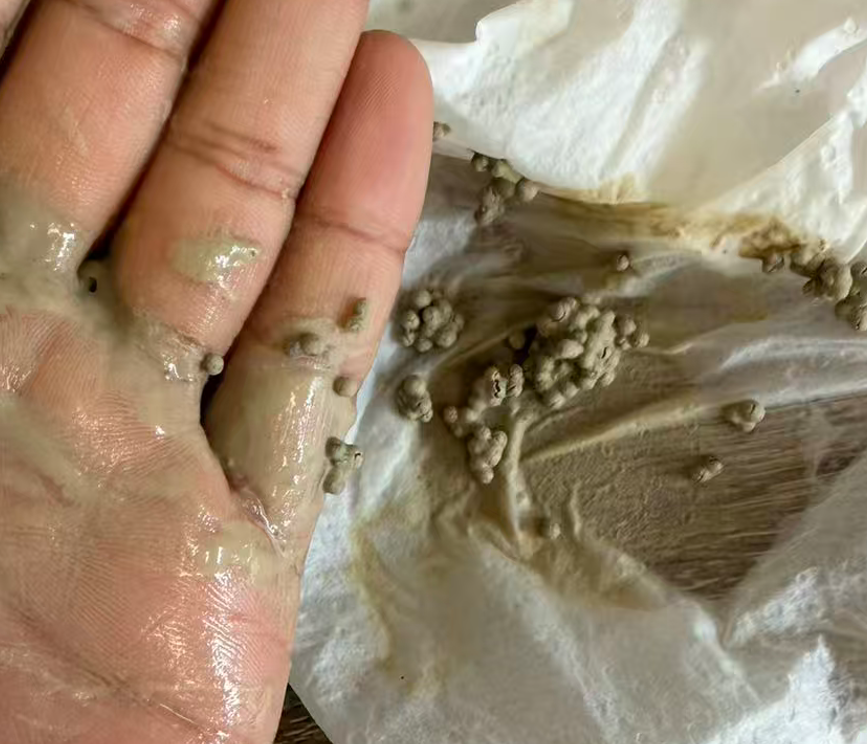
While it looked like a failure, it was actually a fascinating display of mineral science! Let’s dive into the “Why” behind desiccant behavior and how modern technology is changing the game.
1. The Classic Performer: Activated Clay
Activated Clay (Bentonite) has been the industry’s “reliable veteran” for decades.
The Composition: It is a natural mineral soil, bound into granules using a calcium binder.
The Science: It is designed for **Adsorption**—pulling water vapor molecules from the air into its microscopic pores.
The “Sand” Mystery: Because it is a natural earth product held together by a binder, direct contact with liquid water breaks that bond. It reverts to its natural soil state (sand/mud).
The Verdict: It’s a cost-effective, eco-friendly choice for stable environments, but it has its physical limits when things get “messy.”
2. Vapor vs. Liquid: A Critical Distinction
A common misconception is that a desiccant should act like a sponge for liquid spills. In reality, desiccants are precision tools engineered to manage Relative Humidity (RH).
Vapor (Invisible Gas):Desiccants capture the moisture you *can’t* see to prevent mold and corrosion.
Liquid (Visible Fluid):Direct water contact often overwhelms traditional minerals.
If your shipping route involves high-risk “Cargo Sweat” or extreme temperature fluctuations, traditional clay might not be enough to provide a safety margin.
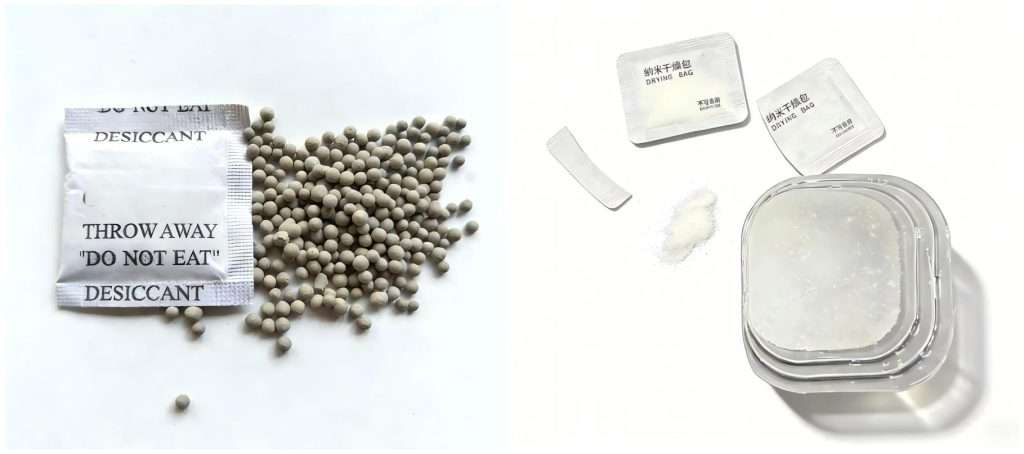
3. The New Generation: Biodegradable Nano Desiccants
As global trade moves toward more sensitive electronics and high-value goods, the industry has evolved. This is where the Biodegradable Nano Desiccant takes the stage.
Unlike clay, which holds moisture in pores, this “New Gen” material undergoes a chemical transformation.
The Cup Test Challenge:
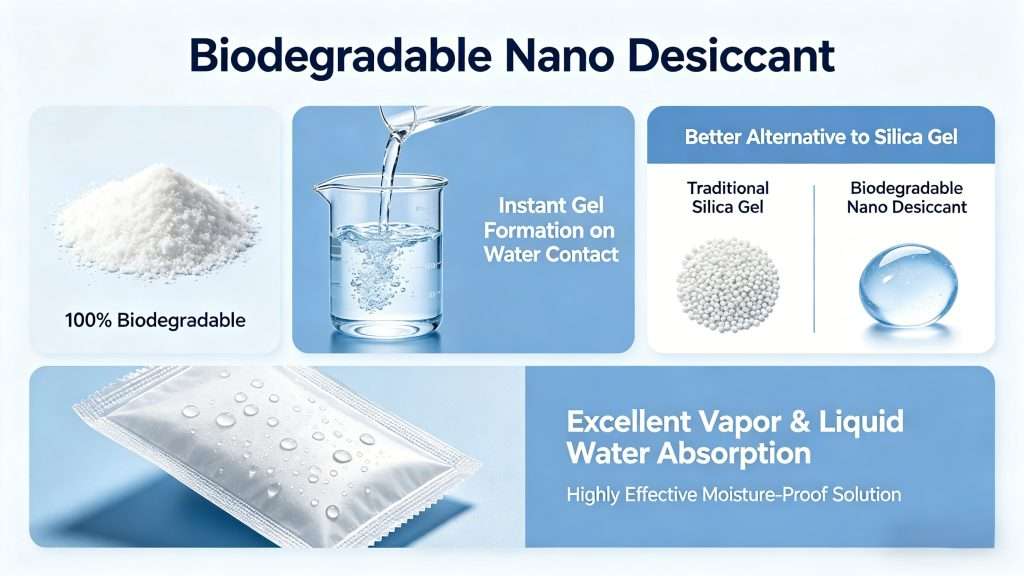
If you place our Nano Desiccant in a cup of water, you won’t see it turn to sand. Instead, you’ll witness:
1. Rapid Absorption: It consumes many times its own weight in water.
2. Gel-Lock Technology: It turns the moisture into a leak-proof gel.
3. Superior Protection: It continues to work even in the most humid tropical shipping lanes.
Hope Simeda’s article is helpful for your reference.
If you find it useful, feel free to like, share and leave us a positive review.
We welcome any inquiries and are always here to assist you with your material & cargo needs.