
Table of Contents
- The Root Cause: What is Container Rain?
- Interactive Container Desiccant Quantity Calculator
- Active Chemistry: How Simeda Rigid CaCl₂ Dry Poles Work
- Technology Comparison: Simeda Rigid Gel Poles vs Traditional Silica Gel
- Quantity Calculation Framework: 20′, 40′, and 40HQ Loads
- Warehouse Stuffing & Placement SOP
- Global Compliance & Safety Standards
- Frequently Asked Questions (FAQ)
- Ready to Safeguard Your Export Shipments? (Direct Inquiry)
The Root Cause: What is Container Rain?
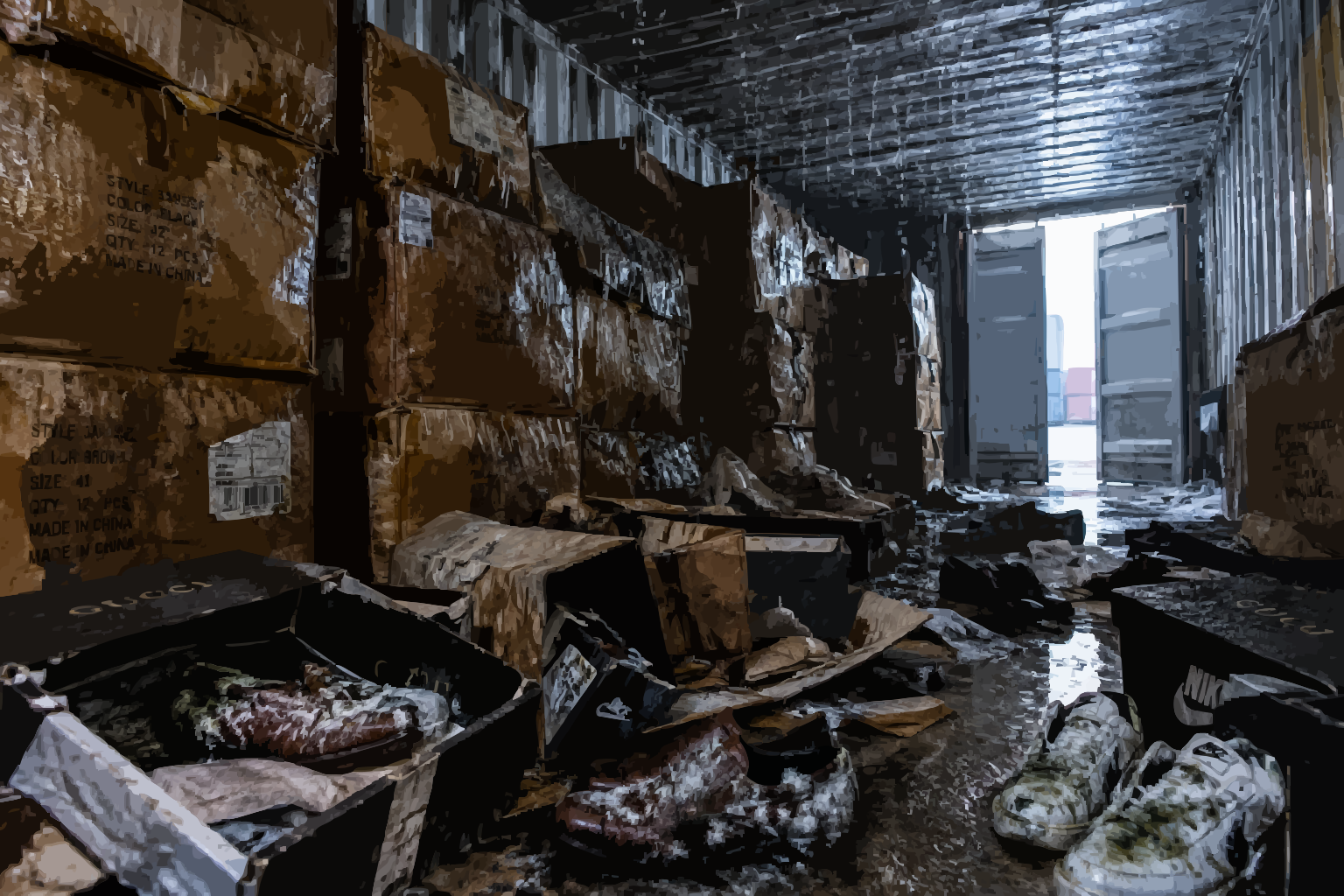
Ocean freight is the lifeblood of international retail distribution, yet an enclosed shipping container behaves like a volatile environmental chamber. Even when cargo is packed dry inside a modern warehouse, temperature swings across trans-oceanic routes create dangerous cycles of condensation—universally known as container rain.
When warm, humid air inside a sealed steel container encounters cold sea currents or nocturnal temperature drops, moisture condensates against the cold ceiling and wall ribs. This condensed liquid drips directly onto master cartons, causing:
- Carton Softening & Pallet Collapse: Crushed outer boxes under stacking loads, leading to terminal warehouse rejections.
- Fungal Outbreaks (Mildew & Mold): Accelerated spore proliferation across footwear, apparel fabrics, leather bags, and wood pallets.
- Musty Odor Infestation: Stale, stagnant humidity trapped inside consumer goods packaging, ruining the unboxing experience.
- Expensive Cargo Claims & Chargebacks: Total loss write-offs and dispute penalties from overseas retail buyers.
Preventing cargo claims requires managing ambient humidity at the container scale. A hanging container desiccant pole is the primary defense line engineered to intercept airborne humidity before condensation occurs.
Instant Container Desiccant Quantity Calculator
Calculate your recommended dry pole requirement based on container volume and transit risk.
Active Chemistry: How Simeda Rigid CaCl₂ Dry Poles Work
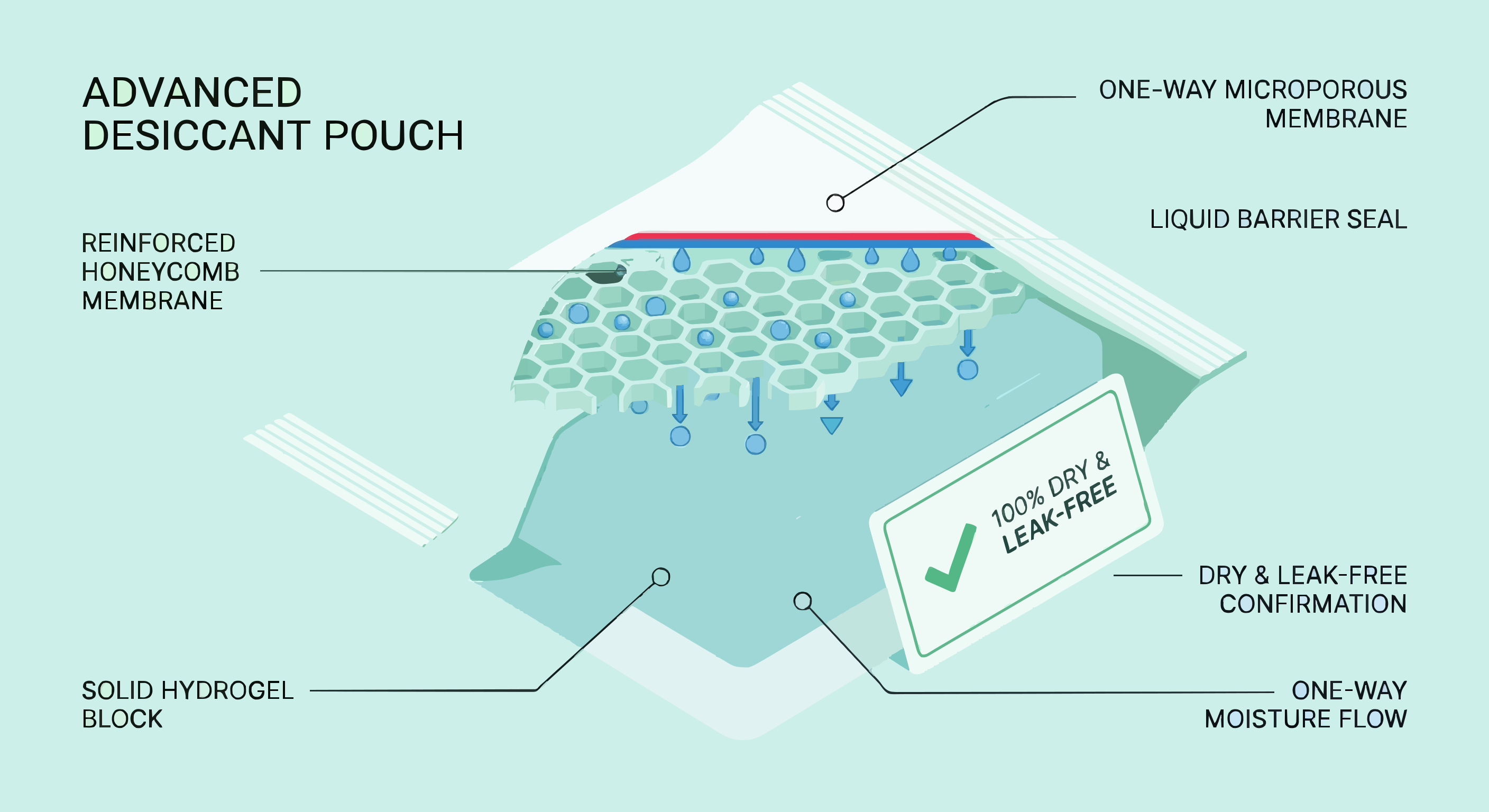
Unlike passive packaging packets, the Simeda Container Desiccant Pole is designed specifically for container airspace moisture control. Each unit operates through a dual-action chemical absorption system encased in a durable protective shell:
- Rigid Perforated Blue Outer Casing (Flexible 1kg, 1.5kg, 2kg+ Specifications): Engineered with an impact-resistant blue polymer shield featuring a multi-hole convection grid. This maximizes air circulation while shielding the inner absorption packets against forklift collisions and cargo crush damage.
- Industrial-Grade Calcium Chloride (CaCl₂): Possesses extreme hygroscopic affinity, absorbing up to 300% of its dry weight at 90% relative humidity.
- Gel-Locking SAP Polymer: Standard calcium chloride liquefies into corrosive brine upon saturation. Simeda integrates specialized polymers that instantly bind the absorbed moisture into a firm, leak-proof gel matrix.
- One-Way Breathable Membrane: Moisture vapor passes freely through the inner membrane, but water droplets cannot escape back out, even under heavy mechanical pressure.
- Recessed Slim-Profile Hook Design: Hangs perfectly flush inside the container wall ribs, occupying zero usable pallet floor space.
Technology Comparison: Simeda Rigid Gel Poles vs Traditional Silica Gel
Logistics planners often compare hanging dry poles against loose silica gel bags. The technical differences below illustrate why modern shipping standards prioritize calcium chloride gel systems:
| Performance Dimension | Traditional Silica Gel Bags | Simeda Rigid CaCl₂ Dry Poles |
|---|---|---|
| Maximum Adsorption Capacity | 25% – 35% of dry weight | 250% – 300% of dry weight (Certified) |
| Weight Needed per 40HQ | 60 – 100 kg (bulky, labor-intensive) | 10 – 14 kg (10 to 14 compact poles) |
| High-Temperature Retention | High desorption risk (releases moisture above 40°C) | Permanent chemical lock (no release up to 80°C) |
| Physical Puncture Resistance | Fragile fabric bag easily torn by pallets | Rigid blue casing shields against scrapes & crushing |
| Placement & Verification | Tossed on top of cargo; easily crushed | Hangs on wall lashing rings; simple photo SOP |
Quantity Calculation Framework: 20′, 40′, and 40HQ Loads
Procurement teams frequently inquire: “How many container desiccants do I need for my load?” There is no single universal quantity. Accurate planning requires evaluating transit duration, seasonal weather, and commodity hygroscopy.
Step 1: Classify Lane Risk Profile
- Standard Risk: Transit under 14 days, temperate climate, dry wooden pallets (<18% moisture content), non-hygroscopic consumer products.
- High Risk / Monsoon Corridor: Transit over 20 days, equatorial crossing, tropical monsoon origin, high-moisture timber pallets, or sensitive footwear and leather goods.
Step 2: Recommended Unit Baseline
| Container Spec | Standard Risk Route | High Risk / Monsoon Lane | Master Carton Packaging |
|---|---|---|---|
| 20′ GP (33 CBM) | 4 – 6 units | 6 – 8+ units | ~0.5 carton (packed 10 or 14/ctn) |
| 40′ GP (67 CBM) | 8 – 12 units | 12 – 16+ units | ~1 master carton |
| 40′ HQ (76 CBM) | 10 – 14 units | 14 – 18+ units | ~1.0 to 1.5 master cartons |
*Note: Because Simeda supplies dry poles in master packs of 10 or 14 units (available in 1000g, 1500g, and 2000g configurations), warehouse operators can standardize procurement and stuffing SOPs by the full box.
Warehouse Stuffing & Placement SOP
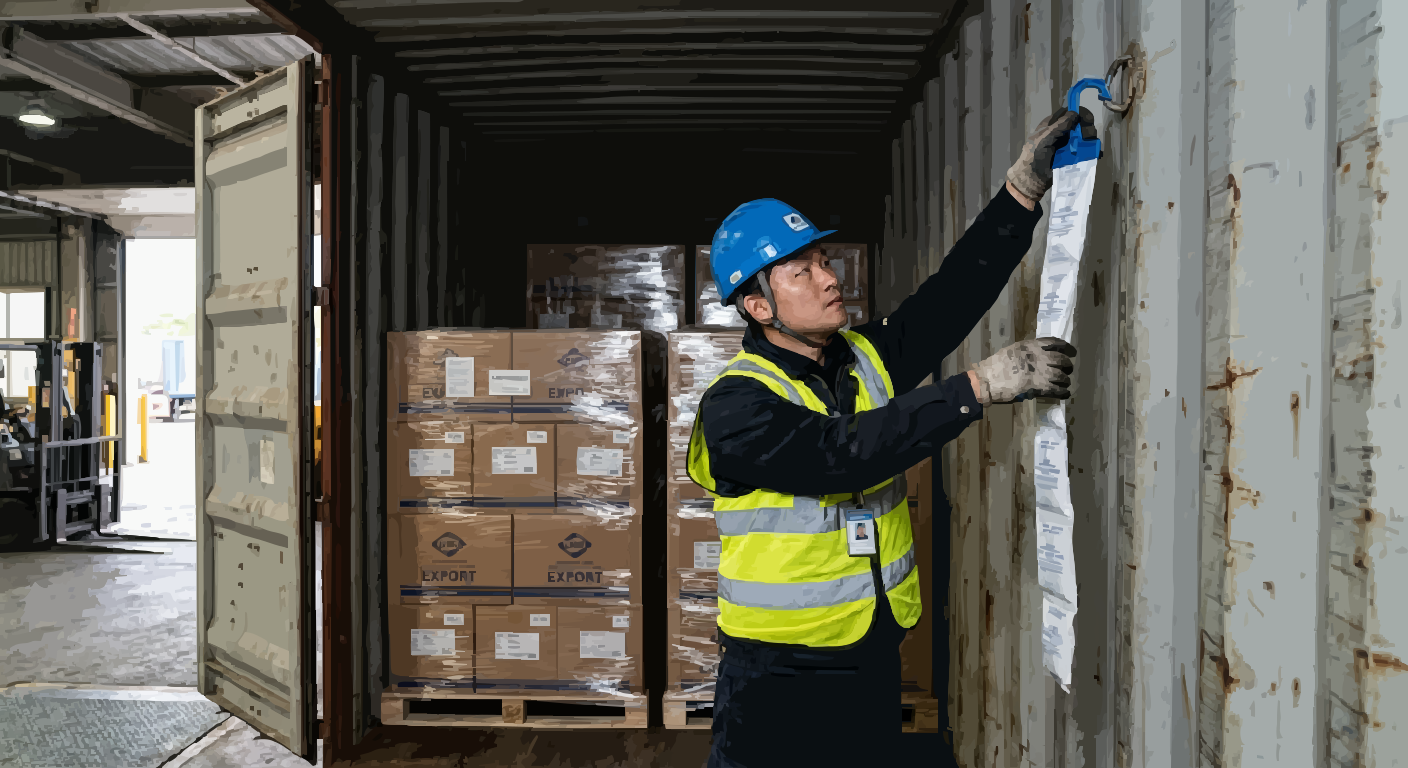
Even premium desiccants cannot protect cargo if installed improperly. Enforce the following five-point stuffing protocol across your packing facilities:
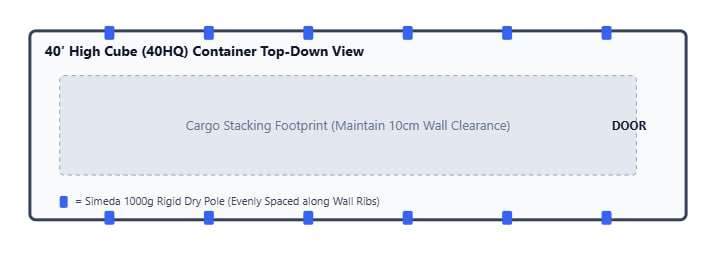
- Hang in the Upper Corrugation: Secure the pole’s plastic hook into the container’s upper wall lashing loops. Warm, humid air gathers near the ceiling where condensation originates.
- Even Longitudinal Distribution: Hang poles along both side walls. Never cluster all poles at the container door.
- Clear Airflow Channels: Maintain a 5–10 cm perimeter between cargo flanks and container walls to promote convection currents through the blue casing’s perforation grid.
- Inspect Pallet Moisture: Test wood pallets with a calibrated pin moisture meter before stuffing. Pallets exceeding 20% moisture content require supplementary desiccant poles.
- Photo Documentation: Mandate high-resolution photo logs of hung poles and lot numbers prior to door sealing for insurance compliance.
Global Compliance & Safety Standards
International shipping demands stringent chemical certification. Simeda manufacturing processes adhere to world-class safety mandates:
- 100% Free of Dimethyl Fumarate (DMFu): Clearly stamped DMF FREE on every pole casing; certified compliant with EU Directive 2009/251/EC.
- EU REACH & RoHS Tested (SGS-ERAF Report Ref: XMNEC26001848601): Screened against all 253 Substances of Very High Concern (SVHC) under EU REACH Regulation (EC) No 1907/2006. All 253 target substances verified ≤0.1% (w/w). Overall: PASS.
- Heavy Metal & Cobalt Free: Safe for clean industrial disposal; non-toxic and non-hazardous.
- DGM Non-Dangerous Goods Certified: Evaluated by the Shanghai Institute of Chemical Industry, certifying safe transit by sea and air without hazardous material surcharges.
Frequently Asked Questions (FAQ)
Ready to Safeguard Your Export Shipments?
Submit your requirements below to receive a direct factory quotation and free testing samples dispatched via DHL/FedEx within 24 hours.
Factory Base: Quanzhou Simeda Biotechnology Co., Ltd., Jinjiang Shoe Capital, Quanzhou, Fujian, China (Postal Code: 362211)